Waterbirds in the Landscape Week 4: Swans
September 24, 2023
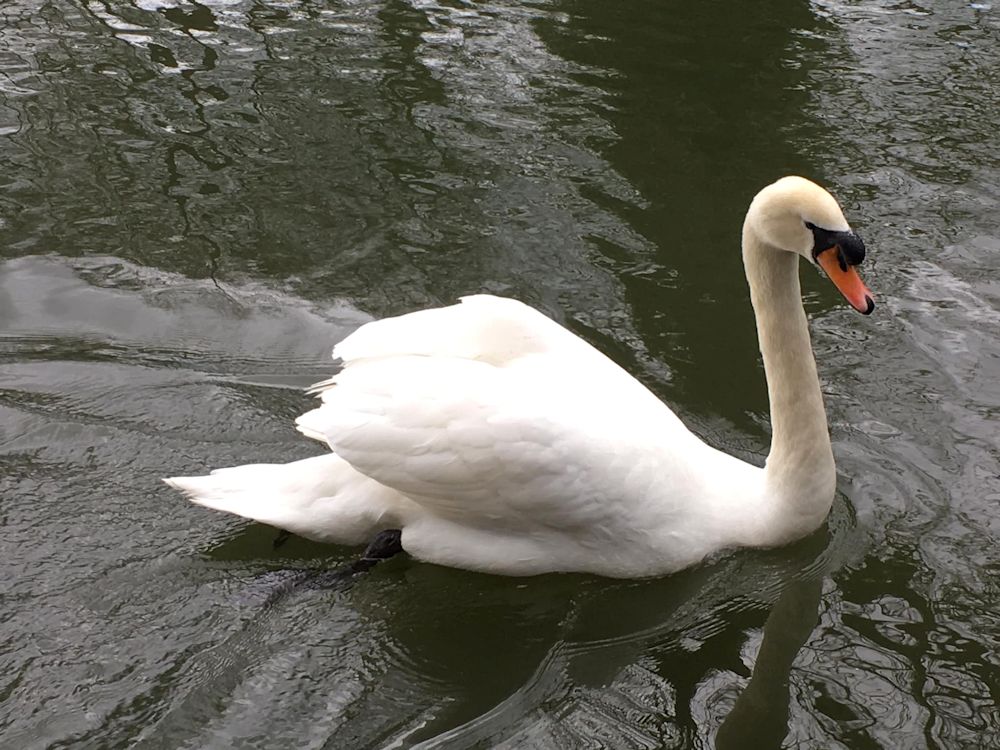
Photos in this post are taken by me or my younger son and we are happy for you to sketch from them.
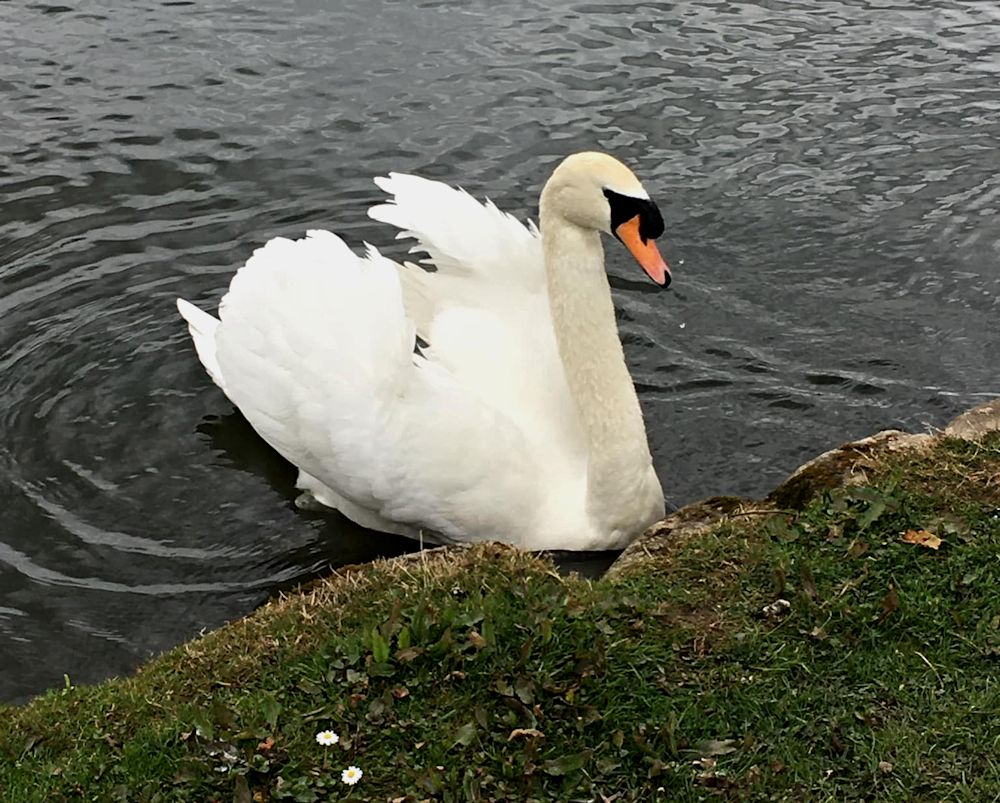
This week we are looking at the Mute Swan. It is the one you will all be familiar with and is easily distinguished from Bewick’s and Whooper swans by its orange beak and the bump above its beak. The other two swans are mainly winter visitors and have black beaks with a yellow patch. They also hold their necks more stiffly upright than the mute swan.
We’ll start by looking at the general form of the swan, mainly in the water, but I would also like you to consider the surrounding landscape paying particular attention to how much of the wider stretch of water and riverbank you would like to include in your painting.
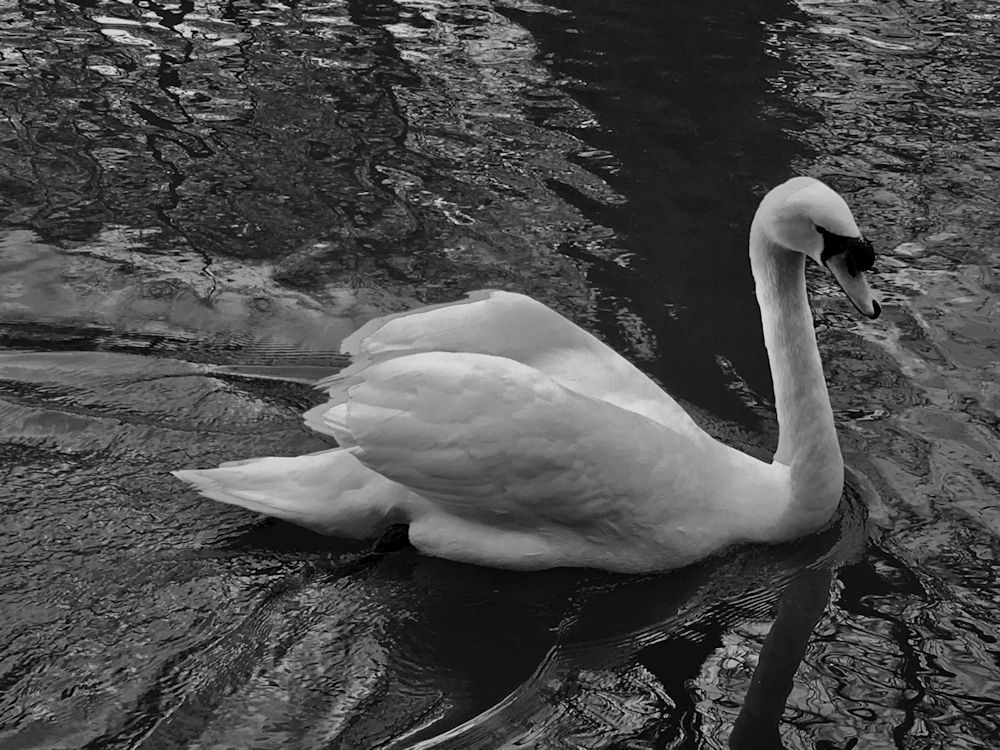
Unlike the geese and ducks swans often swim with their wings slightly elevated as in the photo above but as you will see from photos later in the post they are just as happy to have them closely folded. Take some time to look at the grey-scale image above. The body is lying fairly flat in the water. Its tail feathers when down come to a graceful point and it is easy to see the form of the wings and their relation to the body and neck. Look at the angle of the neck and how it curves to join the body. Also look at the angle the head makes with the neck. If you are working from a photograph it is easy to measure to check overall widths and height and perhaps make a note of what proportions a rectangle just enclosing the whole bird makes. This will help you check its overall shape. Drawing the rectangle will also help you check the angles of the swan’s form in whatever “pose” it is taking up. The swan has 25 vertebrae in its neck whereas all mammals have only seven so it is no wonder the swan has such a mobile neck.

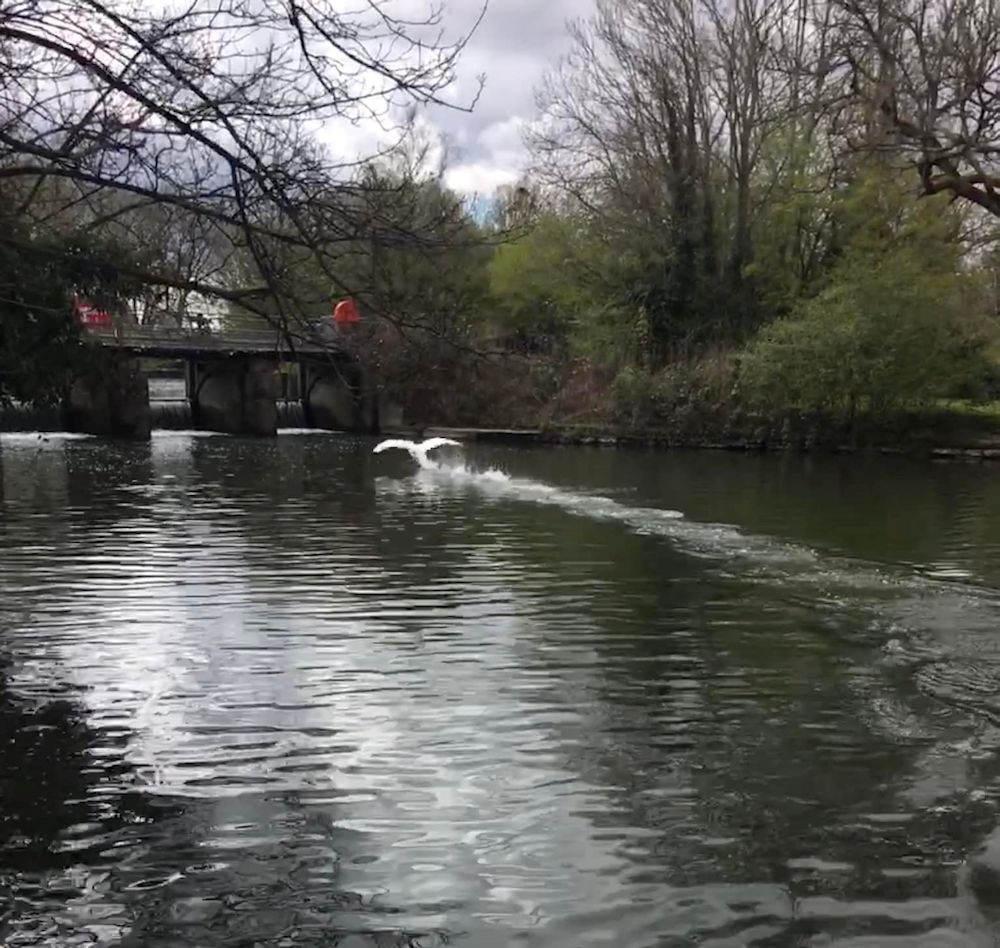
The photos immediately above and below show a swan taking flight from the water. The riverbank and the river and reflections give the bird its context. There is also the excitement of the disturbed water and reflections. If working in watercolour you will have to decide on whether to mask the swan, or paint around its pale form, or to use white gouache. You will also have to decide on how to represent the splashes of water; with spattering (white gouache or masking fluid or whether to scrape out with the tip of a craft knife as a final touch. If you are using pastel on toned paper you may be able to draw all with pastel but it is fine to add any small white highlights with gouache. Alternatively you may like to work in acrylic or a mixed media approach. Whatever media are used remember to experiment a little first on a separate piece of paper.
The two images below are the same photo’ cropped differently; the first gives a much better idea of the wider expanse of water and of the trees reflected in the water. Look at the tonal shift in the water as well as the high contrast of the swans against the water
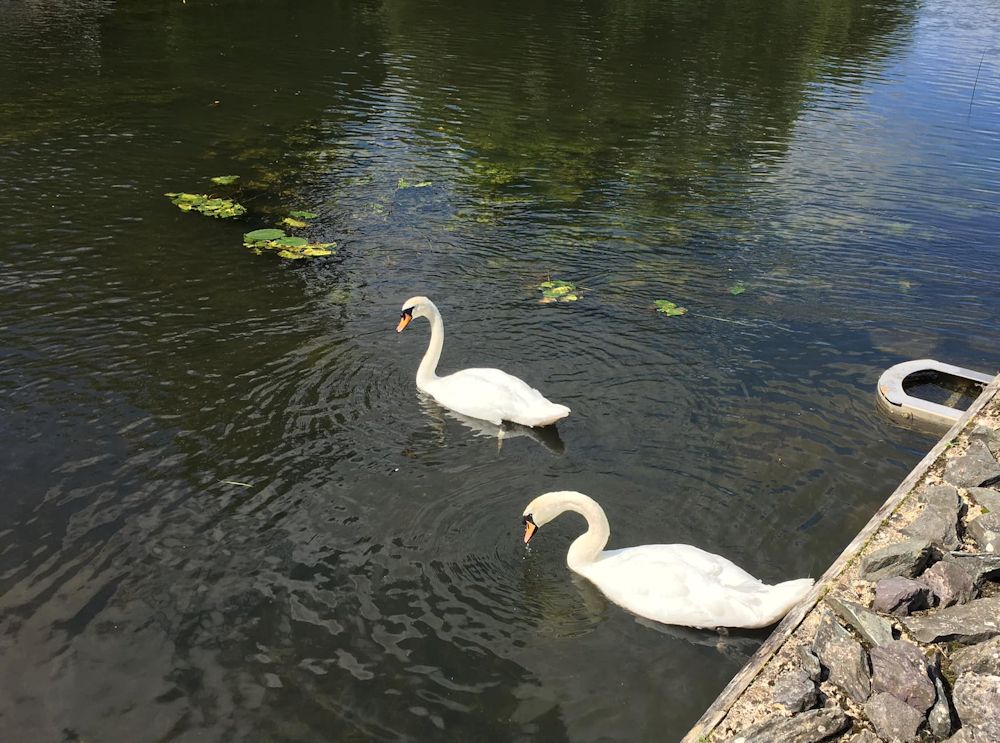
If you don’t like the harsh line at water’s edge you may consider painting vegetation there instead or continuing with water. The photograph does not have to be followed completely; it is only a starting point. Within that do try to make the birds appear convincing though.

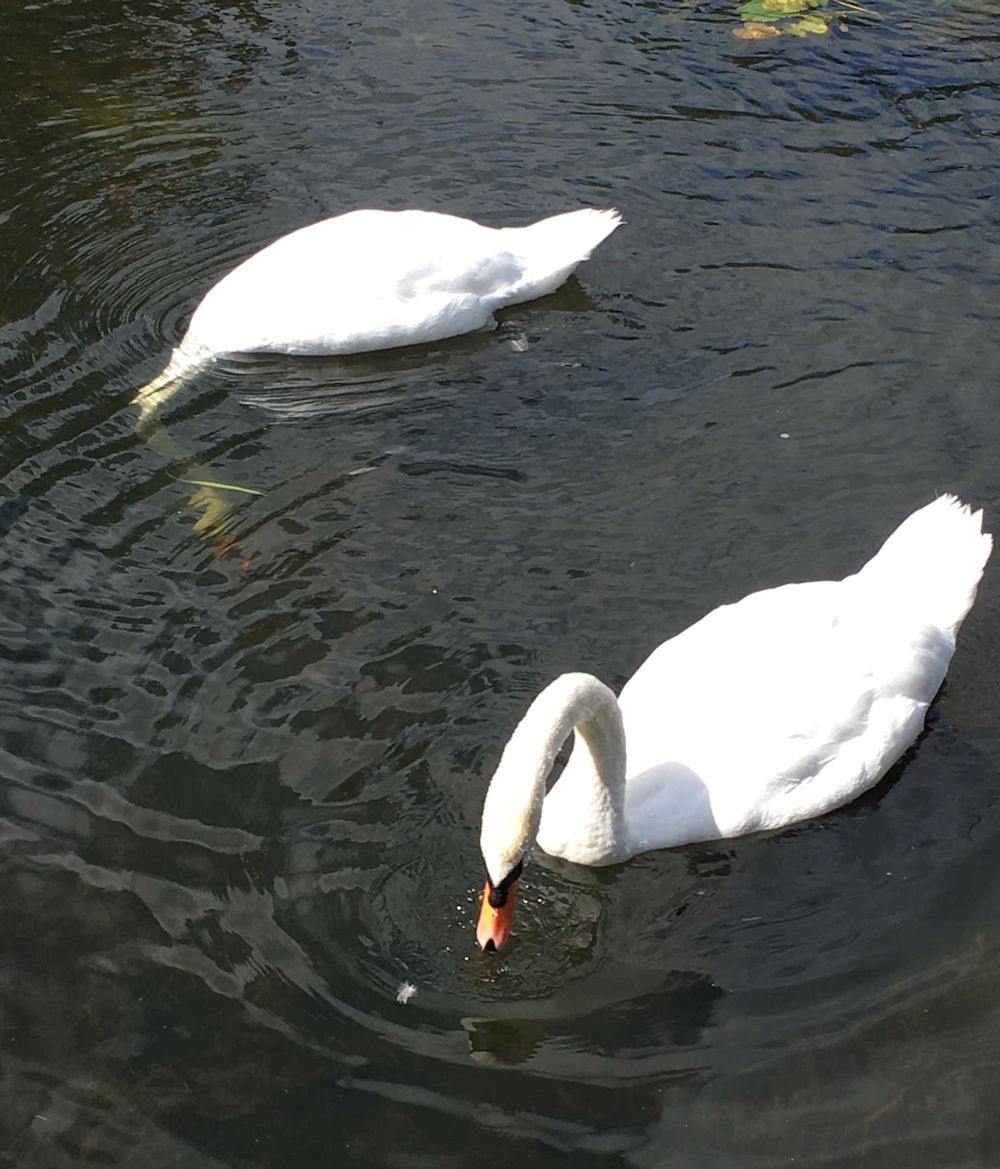

In the images above and below, elements other than the swan are important to the composition. Above we see the boat beyond the swan and also the swan moving through the reflection of the boat. There is a colourful interplay of shapes including the swan’s reflection and that of various parts of the boat.
In the more closely cropped image below, the swan takes centre stage but is still moving through an interesting pattern of tone and colour, in water only disturbed by the movement of the swan. Whether the branches hanging down from the top of the photo should be included is a decision for the artist but it would be a good idea to alter the position of the branch that cuts across the back of the swan’s head and follows the line of its beak. Always look out for objects causing similar difficulties in reference photos.
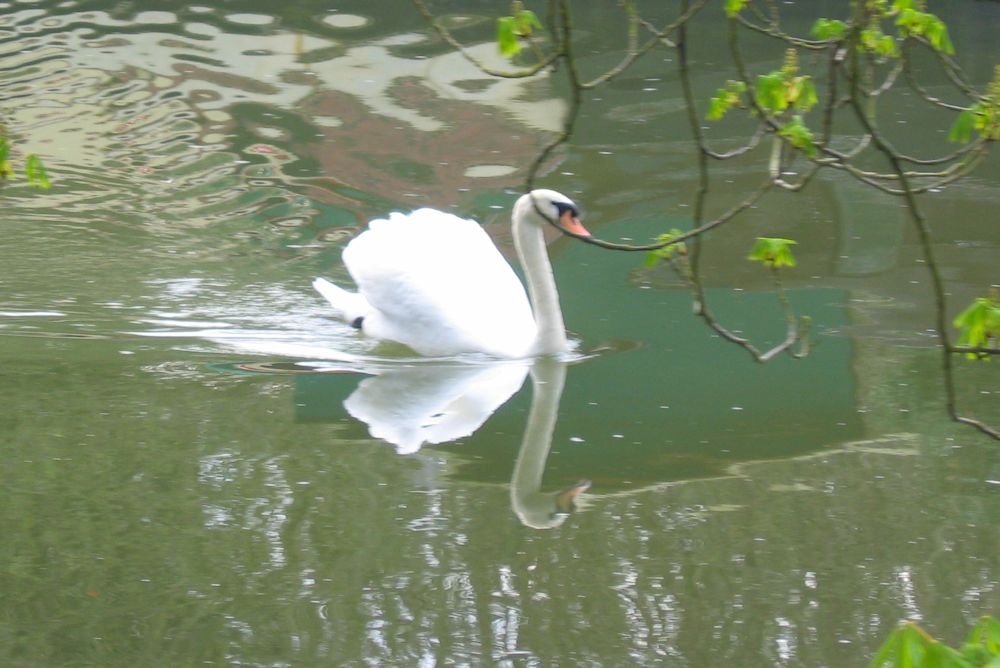

I was interested to see this rather disorderly brood of cygnets swimming ashore. Observe how the swan’s reflection is broken by the ripples in the photo above and how much more of the swan’s form is reflected in the calmer water of the image below.

Lastly, two images from a still water lagoon on the Great Ouse; I was intrigued by the shapes made by the swans and their reflections.
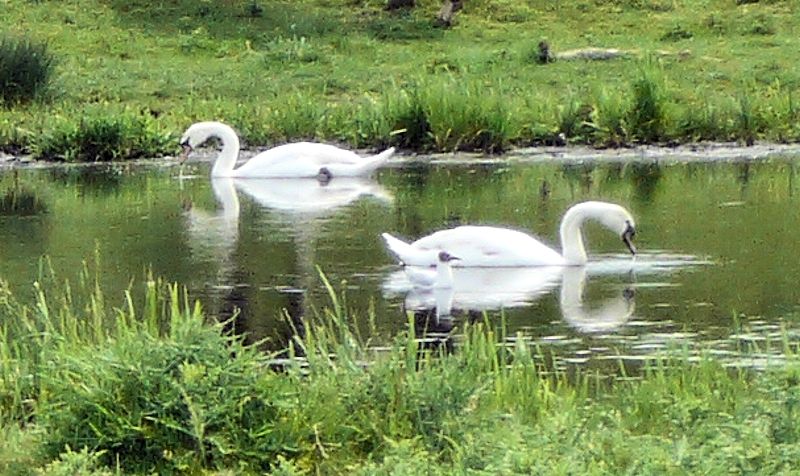
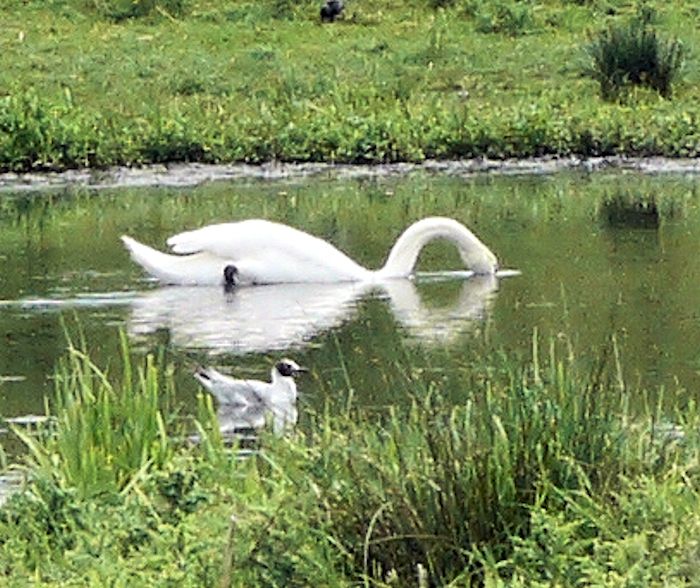
During the session we will make rapid sketches from some of these photos as a prelude to working up a more considered composition including more of the landscape/surrounding water. Hope you have enjoyed looking at these photos and looking forward to seeing work inspired by these photos, or your own reference, or better still from your own sketches made from the riverbank.
Your Paintings:
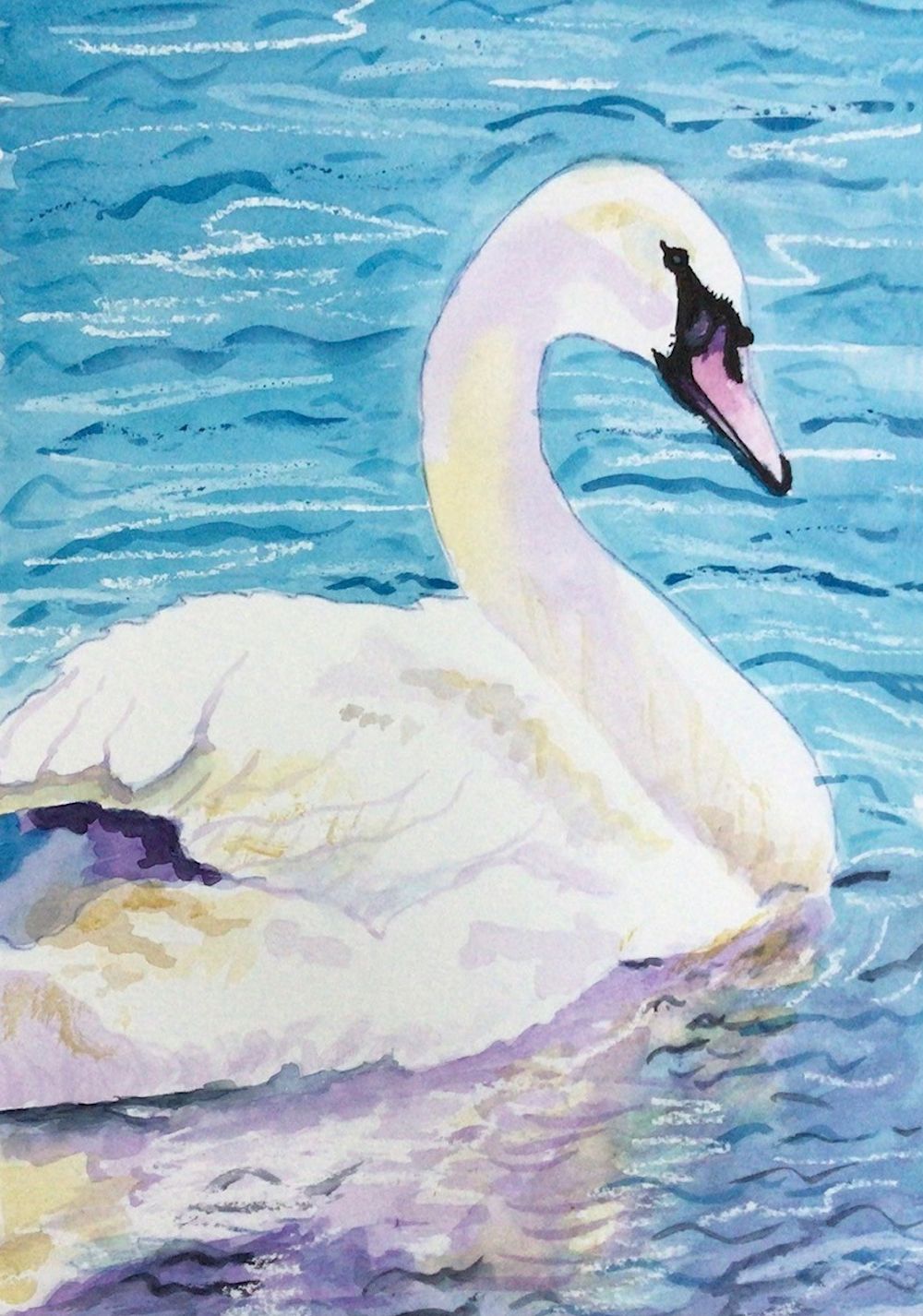
Watercolour by Maricarmen

by Maricarmen
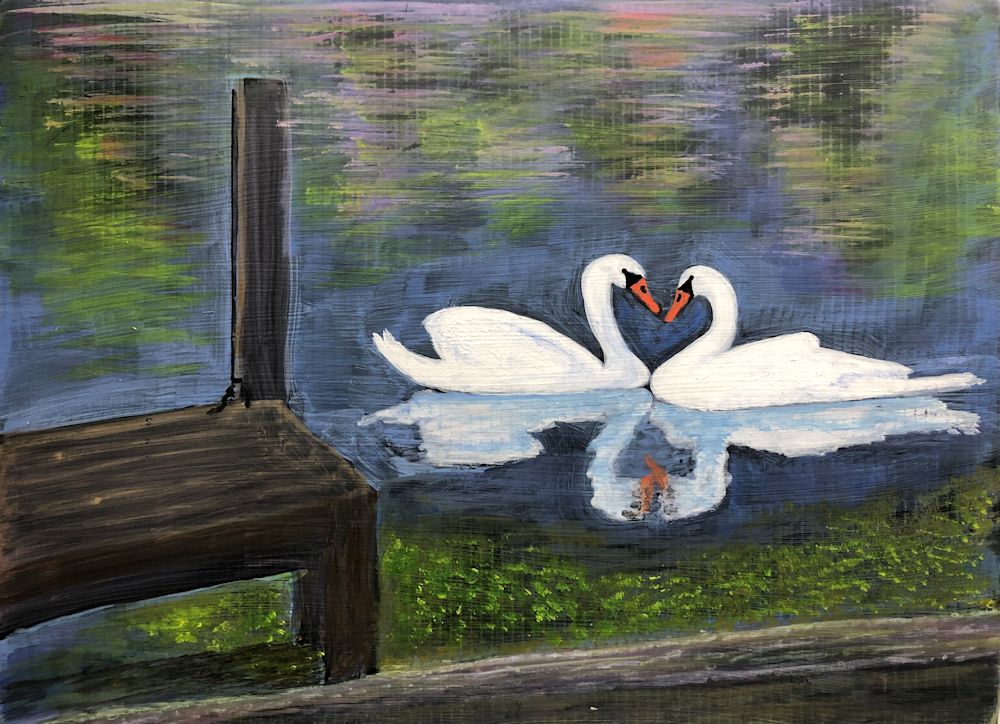
Acrylic by Pamela
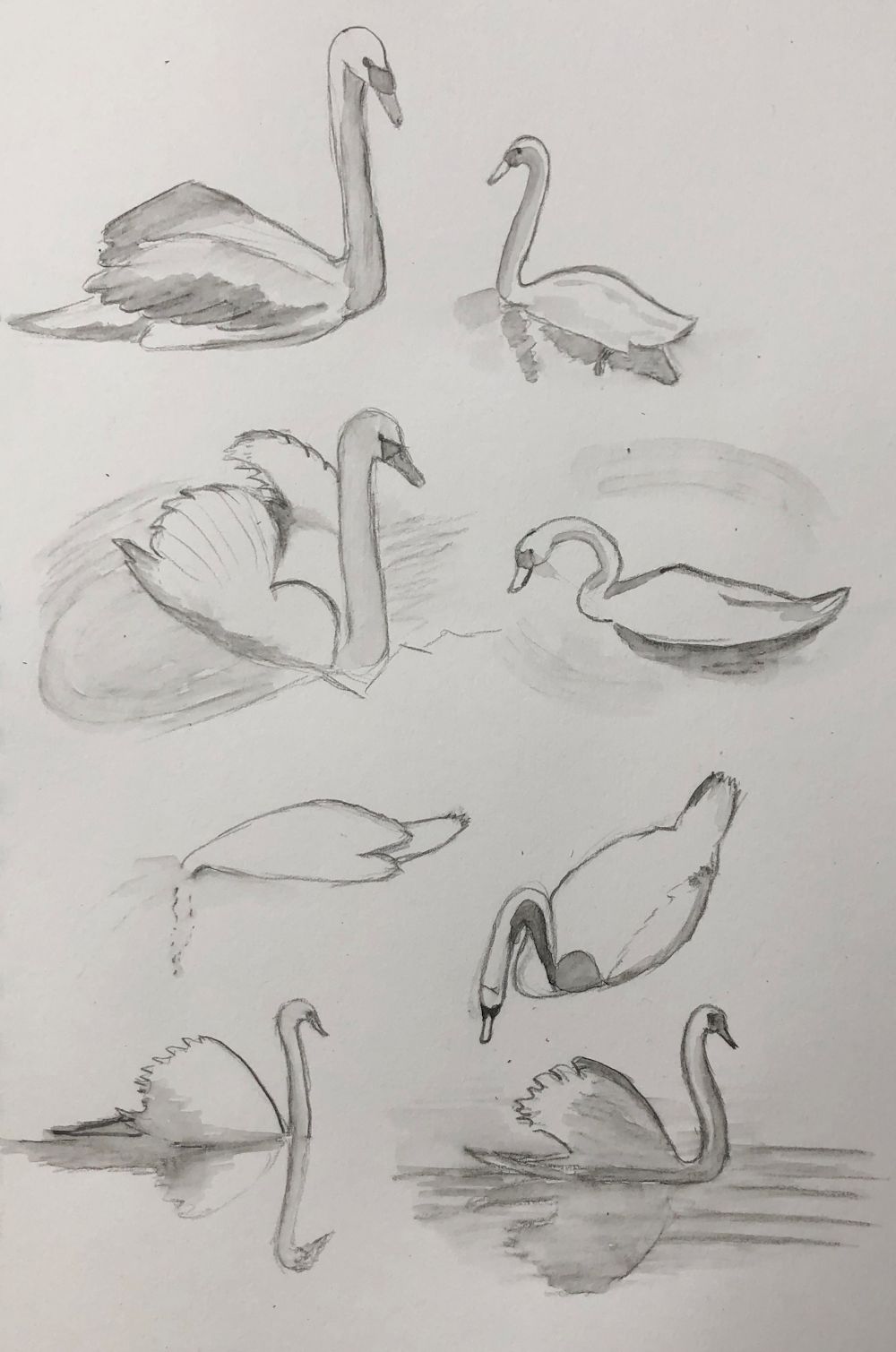
Sketches by Pamela

by Mali
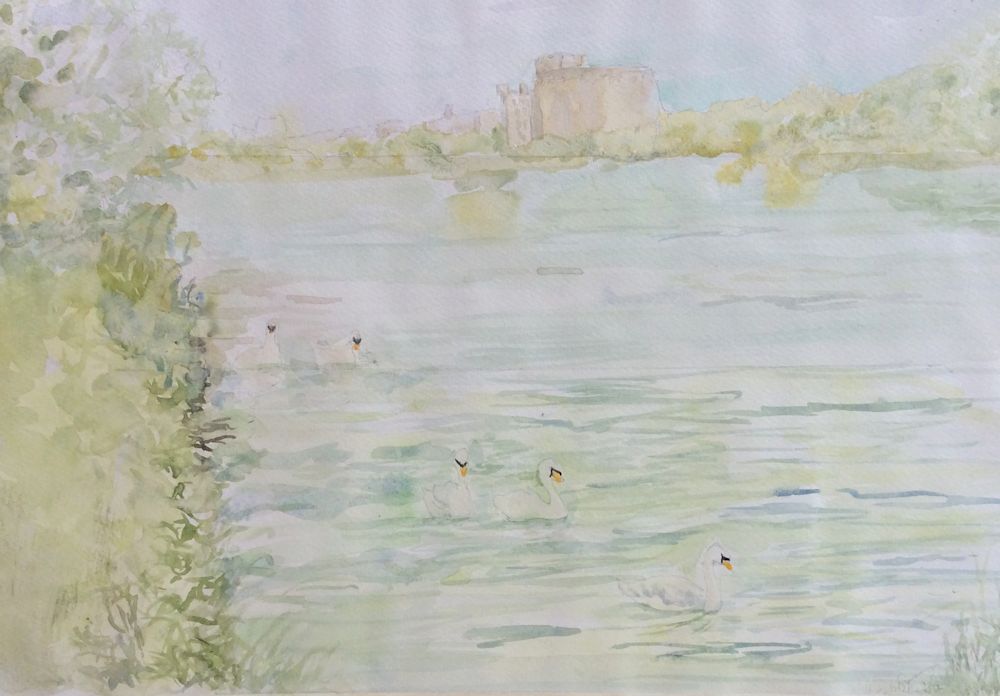
Watercolour by Virginia

by Kate

Acrylic by Kate